Introduction
Bringing home a puppy is exciting, but the first nights can be challenging. Many new puppy owners struggle with whining, barking, accidents, and difficulty settling. Learning How to Crate Train a Puppy Fast: Nighttime and Separation Anxiety Tips can make those early days much easier. The goal is not to force your puppy into silence. Instead, you want to build positive associations with the crate.
A properly introduced crate can become your puppy’s comfortable resting space. It can also support house training, safe travel, and independence. However, rushing the process can create fear and resistance. Therefore, successful crate training depends on short sessions, positive reinforcement, consistency, and patience.
For broader guidance on raising and teaching a young dog, explore this Puppy Training Pillar, which provides additional puppy training information and practical learning resources.
Why Crate Training Matters for Puppies
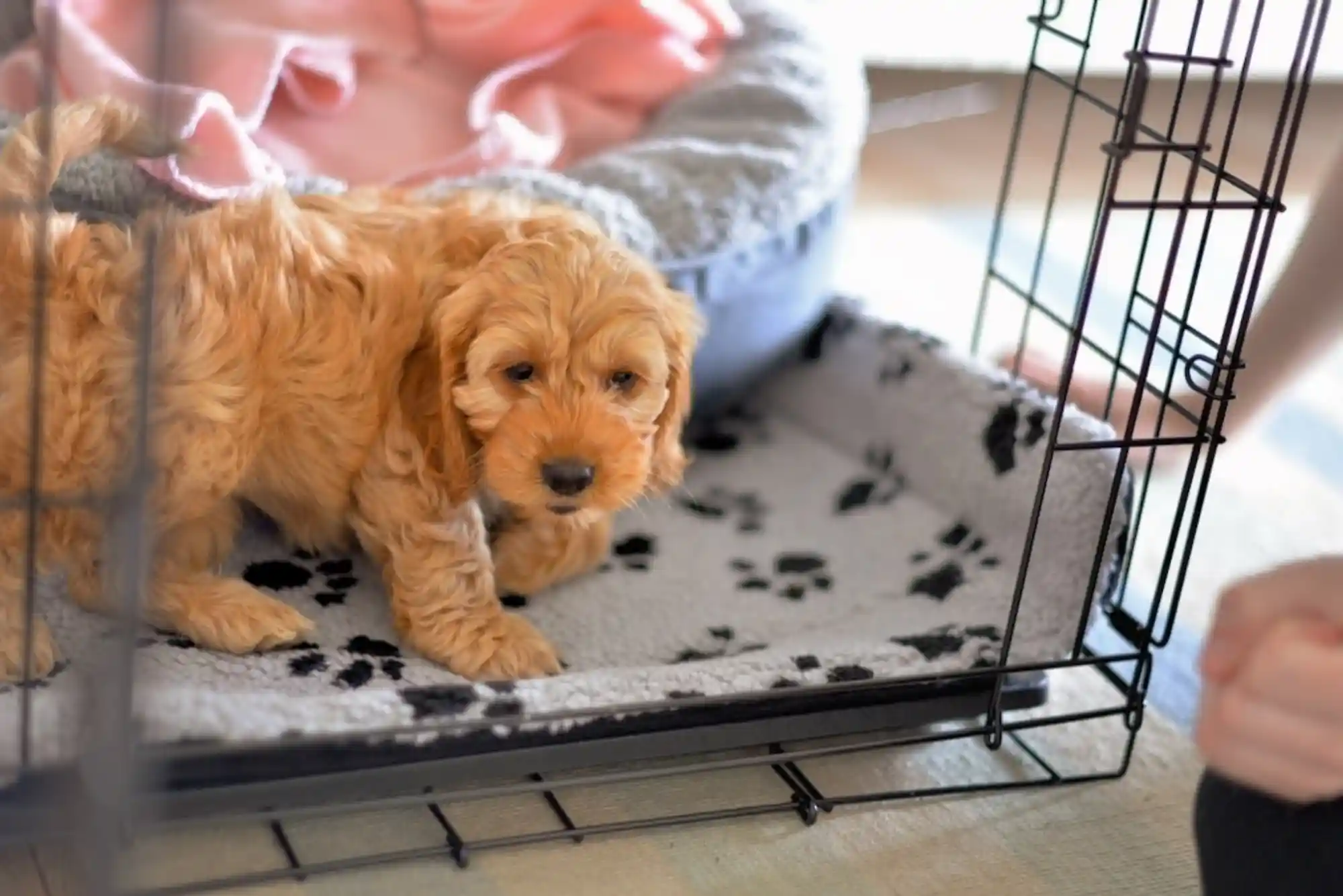
Crate training gives puppies a predictable place where they can relax. When introduced correctly, the crate should never feel like punishment. Instead, your puppy should gradually learn that entering the crate means something pleasant is about to happen.
This training can also help puppies develop healthy independence. A puppy that learns to relax alone for short periods may find future separation easier. However, crate training alone does not automatically solve separation anxiety.
Puppies naturally want social contact. They have recently left their mother and littermates, so being alone can initially feel frightening. Consequently, expecting a young puppy to remain calm for long periods can create unnecessary stress.


The most effective approach is gradual exposure. Start with your puppy comfortable while you are nearby. Then slowly increase the distance and duration as your puppy becomes more confident.
How to Crate Train a Puppy Fast Without Creating Fear
The fastest approach is usually the one that avoids rushing. Begin by making the crate attractive before closing the door. Place it somewhere your family spends time, so your puppy does not immediately associate it with isolation.
Introduce treats near the crate and allow your puppy to investigate. If your puppy walks inside voluntarily, reward that behaviour immediately. You can also place a favourite age-appropriate toy inside when appropriate.
During these early sessions, keep the door open. Let your puppy enter and leave freely. This teaches an important lesson: the crate is not a trap.
Once your puppy willingly enters, begin closing the door for very short periods. Stay beside the crate and offer calm reassurance. Open the door before your puppy becomes highly distressed.
Repeat this process several times throughout the day. Short, successful sessions usually work better than one long training session. As your puppy improves, increase the time gradually.
The Humane Society provides useful welfare-focused information that can complement these Humane Crate Protocols when establishing a positive crate routine.
Choosing the Right Crate Setup
Crate size can make a significant difference. Your puppy should have enough space to stand, turn around, and lie down comfortably. However, excessive space can make house training more difficult for some puppies.
A crate with an adjustable divider can be practical for growing puppies. You can increase the available space as your puppy grows.
Comfort also matters. Use suitable bedding if your puppy does not chew or destroy it. Avoid anything that could become a choking or swallowing hazard.
The crate should also have good airflow and remain in a comfortable location. Avoid placing it beside loud appliances or in an isolated area.
Your puppy should be able to associate the crate with rest and security. Therefore, location matters almost as much as the crate itself.
How to Handle the First Night
The first night is often the hardest because everything is unfamiliar. Your puppy may miss their littermates and feel uncertain about the new environment.
For many young puppies, placing the crate near your bed can make nighttime easier. Your presence provides reassurance without requiring constant interaction.
Before bedtime, give your puppy an appropriate opportunity to eliminate. Then keep the environment quiet and predictable. Avoid exciting games immediately before placing your puppy inside the crate.
When your puppy enters, use a calm voice and reward relaxed behaviour. Turn down the lights and maintain a consistent bedtime routine.
Nighttime potty breaks may still be necessary, especially for very young puppies. If your puppy wakes and appears restless, take them outside calmly. Keep the trip boring and brief, then return directly to the crate.
This prevents nighttime bathroom trips from becoming playtime.
Should You Ignore a Puppy Crying in the Crate?
This is one of the most common questions about crate training. The answer depends on why the puppy is crying.
A puppy may whine because they need the toilet, feel uncomfortable, feel frightened, or simply want attention. Therefore, automatically ignoring every sound is not a reliable strategy.
Veterinary behaviour guidance recommends considering the cause and watching the intensity of the crying. Persistent or escalating distress should not simply be ignored.
If your puppy has recently gone outside, is comfortable, and makes occasional protest noises, give them an opportunity to settle. Avoid immediately opening the door every time they make a sound.
However, frantic scratching, excessive panting, drooling, screaming, or attempts to escape require more attention. These behaviours can indicate significant distress rather than ordinary puppy complaining.
The goal is to teach calmness, not helplessness.
How to Crate Train a Puppy Fast at Night
Nighttime training becomes easier when your puppy follows the same routine every evening. Predictability helps puppies understand what happens next.
Start by reducing stimulation before bedtime. Give your puppy time to settle after eating, playing, and interacting with the family.
Take your puppy outside for a final bathroom opportunity. Then guide them into the crate using a treat or familiar cue.
Keep your voice calm and your movements slow. If your puppy settles quietly, allow them to sleep without unnecessary interaction.
If they wake during the night, consider whether they genuinely need to eliminate. Young puppies often have limited bladder control, so nighttime waking is normal.
As your puppy matures, nighttime bathroom needs generally decrease. Consistency helps them understand that nighttime is for sleeping rather than playing.
Preventing Separation Anxiety During Crate Training
Crate training and separation training should progress together, but they are not exactly the same thing. A puppy may happily rest in a crate while you sit nearby but become distressed when you leave.
Therefore, practise brief absences separately.
Start by stepping away for only a few seconds. Return before your puppy becomes anxious. Repeat this until your puppy remains relaxed.
Gradually increase the duration. You might move from a few seconds to half a minute, then to a minute or longer.
The important principle is progression. If your puppy begins panicking, the previous step was probably too difficult.
Reduce the duration and rebuild confidence. This may feel slower, but it often prevents setbacks.
You can also practise leaving and returning without making departures dramatic. Avoid lengthy emotional goodbyes. Similarly, keep reunions calm and predictable.
Your puppy gradually learns that you leaving is temporary.
Common Crate Training Mistakes
One common mistake is expecting instant results. Some puppies adapt quickly, while others need considerably more time.
Another mistake is using the crate as punishment. If the crate becomes associated with scolding or isolation, your puppy may resist entering it.
Leaving a puppy crated for excessive periods is another concern. A crate should support training and safety, not replace exercise, interaction, toilet breaks, and mental stimulation.
It is also important not to increase crate duration too quickly. A puppy that succeeds for ten minutes may not be ready for an hour.
Instead, build duration gradually while watching body language. Relaxed behaviour is more valuable than simply keeping the door closed.
For additional information about puppy care, behaviour, and training topics, you can also visit Infobeast.
How Long Does Crate Training Take?
There is no universal timeline for crate training. Some puppies become comfortable within several days, while others require weeks of gradual practice.
Your puppy’s age, temperament, previous experiences, environment, and training consistency can all influence progress.
Short periods of calm crate use may develop relatively quickly. However, reliable comfort when left alone can take longer.
Therefore, avoid measuring success only by whether your puppy stops crying. Look for broader signs of progress.
Your puppy may begin entering voluntarily, relaxing faster, sleeping longer, and remaining calm when you move around the room. These are meaningful improvements.
Remember that fast crate training does not mean forcing rapid results. It means creating efficient learning without unnecessary stress.
When to Get Professional Help
Some puppies experience distress that goes beyond normal adjustment. If your puppy repeatedly panics whenever you leave, professional guidance may be appropriate.
Contact your veterinarian if you notice sudden behavioural changes, signs of pain, excessive distress, or unusual elimination problems.
A qualified trainer or veterinary behaviour professional can also help identify whether the problem involves confinement, separation, fear, or another issue.
This distinction matters because different problems require different approaches. Simply increasing crate time will not necessarily resolve genuine separation anxiety.
Early support can prevent the problem from becoming more established.
Frequently Asked Questions
How long should I let my puppy cry in the crate?
There is no single number of minutes that works for every puppy. Consider the reason for the crying and its intensity.
Brief complaining may settle naturally. However, escalating or panicked crying should be addressed rather than ignored.
Should I put my puppy’s crate in my bedroom?
Placing the crate near your bed can help a young puppy feel secure during the first nights. It also makes nighttime bathroom needs easier to notice.
Once your puppy sleeps comfortably, you can gradually move the crate toward its long-term location.
How do I stop my puppy from crying in the crate at night?
Start with the basics. Make sure your puppy has exercised appropriately, eaten, eliminated, and has a comfortable sleeping environment.
Then maintain a predictable bedtime routine. If crying continues or becomes intense, reassess whether your puppy is frightened, uncomfortable, or needs the toilet.
Is crate training cruel?
Crate training is not inherently cruel when it is introduced gradually and used responsibly. The crate should provide safety and rest rather than punishment.
Problems arise when a puppy is forced inside, punished in the crate, or confined for excessive periods.
Can crate training prevent separation anxiety?
Crate training can help a puppy develop independence, but it is not a complete treatment for separation anxiety.
Short, positive absences are important. If your puppy shows severe distress when alone, seek professional guidance rather than simply increasing crate time.
Conclusion
Learning How to Crate Train a Puppy Fast: Nighttime and Separation Anxiety Tips is ultimately about creating trust. Your puppy needs to understand that the crate is a safe place to rest, not somewhere they are trapped.