
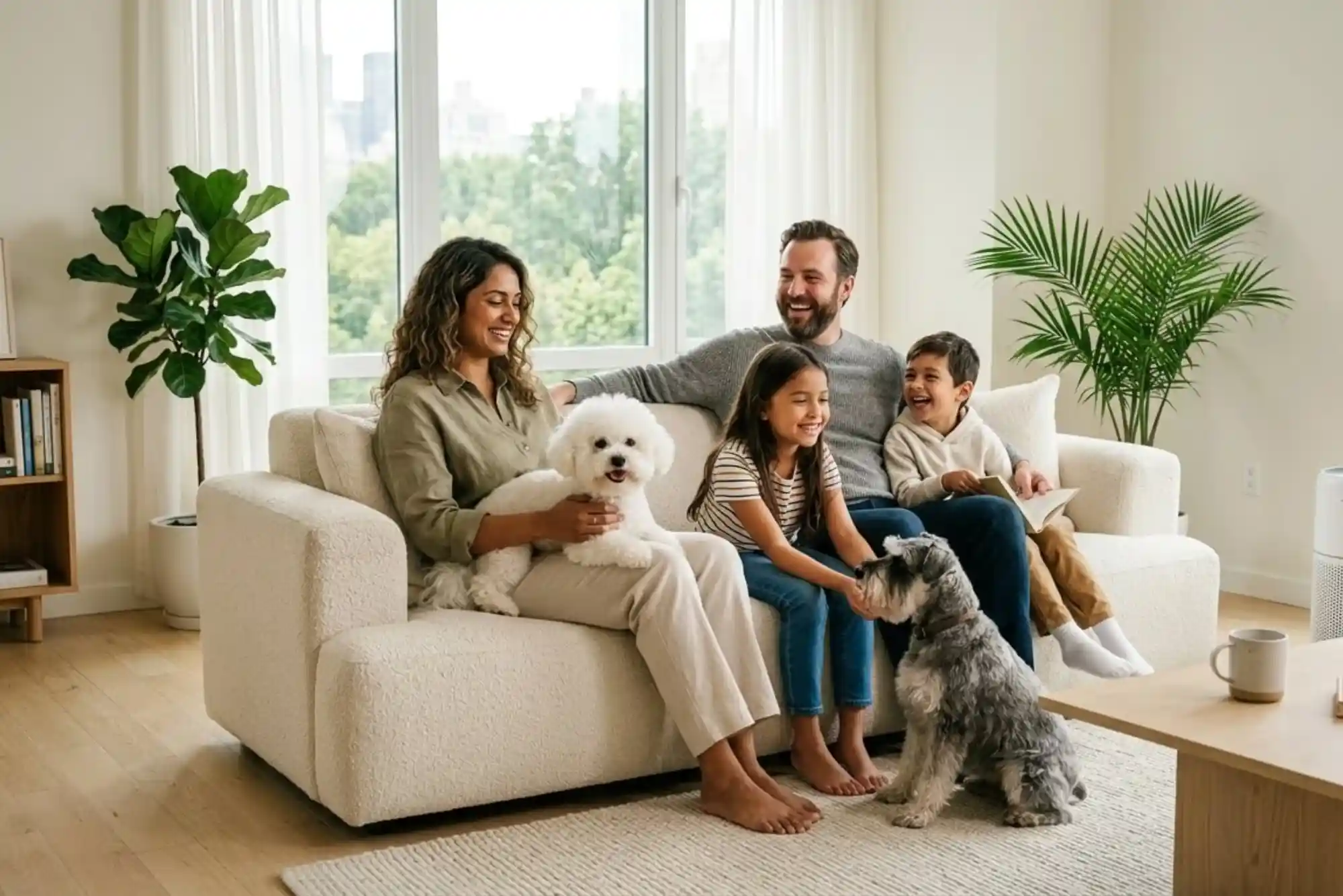
Introduction
Finding the right dog can feel challenging when someone in your family has pet allergies. Fortunately, some breeds produce fewer allergens than others. These dogs are often described as hypoallergenic because they tend to shed less hair and may spread fewer allergen-carrying particles around the home.
However, it is important to understand that no dog is completely allergen-free. Allergic reactions usually involve proteins found in a dog’s dander, saliva, and urine. Hair can also carry these proteins throughout the house. Therefore, choosing a low-shedding breed can help, but it cannot guarantee an allergy-free experience.
The Top 7 Hypoallergenic Dog Breeds for Families with Pet Allergies include several breeds with different sizes, personalities, and exercise needs. Choosing between them requires more than simply looking at their coat. Families should consider temperament, grooming, activity levels, living space, and the severity of allergies.
What Makes a Dog Hypoallergenic?
A hypoallergenic dog generally produces fewer allergens or sheds less than many other breeds. Reduced shedding can help limit the amount of dander and saliva-coated hair released into the surrounding environment.
Still, the term “hypoallergenic” can be misleading. Every dog produces proteins that can trigger allergies. Some people may react strongly to one breed but experience fewer symptoms around another.
For that reason, families should spend time with a particular dog before bringing it home. This approach can provide useful information about individual reactions.


Regular grooming also matters. Bathing, brushing, and professional coat care can reduce loose hair and accumulated dander. Cleaning floors, furniture, bedding, and other surfaces can further improve the indoor environment.
Top 7 Hypoallergenic Dog Breeds for Families with Pet Allergies
1. Poodle
The Poodle is one of the most popular choices for families seeking a lower-shedding companion. Poodles have curly coats that tend to retain loose hair instead of releasing it throughout the home.
They are available in Standard, Miniature, and Toy sizes. This variety makes them suitable for different household environments.
Poodles are also highly intelligent and generally eager to learn. Their trainability can make family life easier, particularly when children are taught how to interact respectfully with dogs.
However, their coat requires consistent grooming. Without regular brushing and trimming, the coat can become tangled and difficult to maintain.
Standard Poodles also need plenty of physical activity and mental stimulation. Families should be prepared to provide daily exercise and training.
2. Bichon Frise
The Bichon Frise is a small companion breed known for its cheerful personality and soft, curly coat. Its low-shedding coat makes it a common choice among families concerned about allergens.
Bichons can adapt well to different living environments. They often enjoy spending time with people and can become closely attached to their families.
Their small size can also make them easier to manage in apartments or smaller homes. Nevertheless, they still need regular walks and interactive play.
Grooming is an important responsibility. Their coat needs frequent brushing and professional maintenance to prevent mats.
Families with young children should also teach gentle handling. Although Bichons can be playful, children should always learn how to respect a dog’s space.
3. Portuguese Water Dog
The Portuguese Water Dog is an energetic breed with a curly or wavy coat. It became particularly popular among families looking for an active, lower-shedding dog.
These dogs are intelligent and athletic. They often enjoy swimming, retrieving, walking, and other activities that keep their bodies and minds engaged.
Because of their energy, they may suit active households particularly well. A family that enjoys outdoor activities may find this breed a good lifestyle match.
However, Portuguese Water Dogs are not ideal for families seeking a very low-maintenance pet. They require exercise, training, and regular coat care.
Their larger size also means families should consider available space. Proper socialization from an early age can help them become confident and well-mannered companions.
4. Schnauzer
Schnauzers are another popular option for families concerned about shedding. The breed comes in Miniature, Standard, and Giant varieties, giving families several size options.
Their wiry coat generally sheds less than the coats of many other dogs. However, regular grooming remains necessary to keep the coat healthy.
Schnauzers are typically alert, intelligent, and energetic. They often enjoy learning new commands and participating in family activities.
Miniature Schnauzers can be particularly appealing to families wanting a smaller companion. Standard and Giant Schnauzers require more space and experienced handling.
As with every breed, individual temperament varies. Early socialization and positive training can help a Schnauzer develop appropriate household behavior.
5. Maltese
The Maltese is a small companion dog with a long, silky coat. Despite its luxurious appearance, the breed is considered low-shedding.
Maltese dogs are often affectionate and enjoy close interaction with their owners. Their small size can make them practical for apartments and smaller homes.
However, their coat requires considerable maintenance. Daily brushing may be necessary when the coat is kept long.
Families can choose a shorter pet haircut to simplify maintenance. Even with shorter hair, regular grooming remains important.
Because Maltese dogs are small, young children should be supervised when handling them. Accidental rough play can cause injuries to a small dog.
6. Soft-Coated Wheaten Terrier
The Soft-Coated Wheaten Terrier is a medium-sized breed with a soft, silky coat. It is known for relatively low shedding compared with many other dogs.
Wheatens are generally lively, affectionate, and playful. They can be wonderful family companions when provided with sufficient exercise and training.
Their coat can mat easily, so consistent brushing is important. Professional grooming may also be needed to maintain the coat properly.
This breed can suit families looking for a dog that is more active than a small lap companion. Daily walks, play sessions, and training can help satisfy its physical and mental needs.
Families should remember that low shedding does not eliminate allergens. Spending time with the individual dog remains one of the most useful ways to evaluate compatibility.
7. Lagotto Romagnolo
The Lagotto Romagnolo is an Italian breed recognized for its curly coat and working background. It is relatively low-shedding and is often considered among the more allergy-friendly dog options.
Lagottos are intelligent and active dogs. They were historically associated with water-related work and are also famous for truffle hunting.
Their intelligence means they benefit from mental challenges. Puzzle toys, scent games, obedience training, and outdoor activities can help keep them engaged.
This breed may be especially suitable for families that enjoy an active lifestyle. However, it may not be the best choice for households looking for a calm dog that requires little daily activity.
Regular grooming is also necessary because its curly coat can become tangled without proper care.
How to Choose the Right Hypoallergenic Dog for Your Family
Choosing among the Top 7 Hypoallergenic Dog Breeds for Families with Pet Allergies requires looking beyond shedding levels. Every family has different needs, and every dog has an individual personality.
Start by considering your household’s activity level. An energetic breed may be unsuitable for a family that prefers quiet evenings and limited outdoor activity.
Next, consider grooming requirements. Low-shedding coats often need more grooming rather than less. Regular brushing, bathing, trimming, and professional grooming may become part of your routine.
The dog’s size also matters. Larger breeds generally need more room and exercise, while small breeds may be easier to accommodate in compact homes.
Children’s ages should also influence your decision. Young children need supervision around every dog, regardless of breed. Older children can often participate in training, feeding, and appropriate grooming routines.
Most importantly, consider the individual allergy response. Before adoption or purchase, spend meaningful time around the specific dog. If possible, allow the allergic family member to interact with the dog indoors.
How to Reduce Dog Allergens at Home
Choosing one of the Top 7 Hypoallergenic Dog Breeds for Families with Pet Allergies is only one part of managing allergens. Household habits can also make a meaningful difference.
Regular vacuuming can help remove hair and dander from floors and furniture. Using a vacuum designed to capture fine particles can be particularly useful.
Wash the dog’s bedding regularly and clean frequently used blankets. Keeping the sleeping area clean can reduce accumulated allergens.
It can also help to keep the dog away from bedrooms. Creating an allergy-conscious sleeping area may reduce prolonged exposure during the night.
Regular grooming is another important step. Brush the dog according to its coat type and grooming requirements. Ideally, grooming should happen in an easy-to-clean area or outdoors when practical.
Handwashing after handling the dog can also reduce the transfer of allergens to the face and other surfaces.
If allergies are significant, families should discuss management strategies with a qualified healthcare professional.
Are Hypoallergenic Dogs Completely Allergy-Free?
No dog is completely allergy-free. The main allergens come from proteins associated with dander, saliva, and urine rather than simply from the hair itself.
Therefore, a low-shedding dog may still trigger symptoms. However, some people experience fewer problems around certain breeds.
Individual sensitivity varies considerably. Two people with similar allergy diagnoses may respond differently to the same dog.
That is why direct exposure is so important before making a long-term commitment. A breed’s reputation alone cannot predict how a particular family member will react.
Frequently Asked Questions
Are hypoallergenic dogs better for families with allergies?
Some low-shedding breeds may be easier for allergy-sensitive families to live with. However, no dog is completely allergen-free. Individual reactions can differ significantly.
What is the most hypoallergenic dog breed?
There is no single breed that is universally the most hypoallergenic. Poodles, Bichons, Schnauzers, Maltese, and several other low-shedding breeds are commonly considered allergy-friendly.
Can you have a dog if you are allergic?
Some people with allergies can live successfully with dogs. The outcome depends on individual sensitivity and exposure. Discuss persistent or severe symptoms with a healthcare professional.
Are Poodles really hypoallergenic?
Poodles are commonly described as hypoallergenic because they have low-shedding curly coats. However, they still produce allergens and can trigger symptoms in sensitive individuals.
Do hypoallergenic dogs shed?
Many hypoallergenic breeds shed less than typical dogs. However, low shedding does not mean zero shedding. Their coats often require regular brushing and professional grooming.
Conclusion
The Top 7 Hypoallergenic Dog Breeds for Families with Pet Allergies offer several options for households searching for a potentially more manageable companion. Poodles, Bichon Frises, Portuguese Water Dogs, Schnauzers, Maltese, Soft-Coated Wheaten Terriers, and Lagotto Romagnolos all have characteristics that may appeal to allergy-conscious families.